
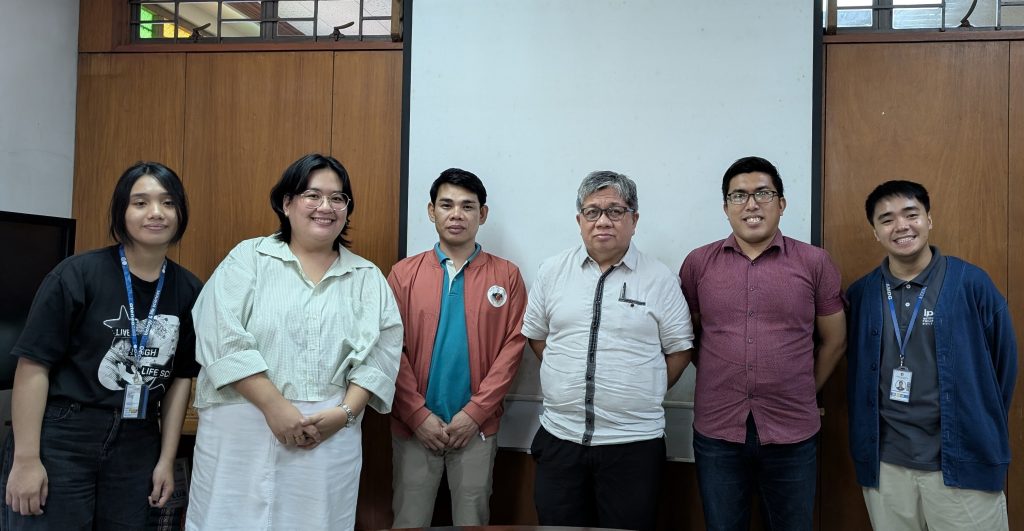
As the Philippines continues to strengthen its digital health infrastructure, ensuring the ethical and secure use of health data remains a critical priority. The Traditional Medicine Health Records and Reports in the National Government Databases or the TaMaHRRiND Project addresses this challenge by embedding strong data privacy protections at the core of its research and systems development.
Funded by the Department of Health – Philippine Institute of Traditional and Alternative Health Care (DOH-PITAHC), the TaMaHRRiND Project is a pioneering initiative that seeks to integrate Traditional Medicine and Complementary and Alternative Medicine (TM/CAM) into the country’s national health information ecosystem.
Building a Prototype TM/CAM Electronic Recording and Reporting System
The primary objective of the TaMaHRRiND Project is to develop a prototype TM/CAM electronic recording and reporting system. Beyond system development, the project envisions the application as a pilot TM/CAM recording and reporting platform aligned with the Philippine Health Information Exchange (PHIE) and the Universal Health Care (UHC) National Health Data Repository Framework, supporting evidence-based policymaking for traditional and integrative healthcare.
Why Deidentification and Reidentification Matter
Central to the project’s data collection process is the TaMaHRRiND Research Guideline on Deidentification and Reidentification, a binding institutional protocol that governs how health data are handled throughout the project lifecycle. The guideline recognizes that while health data are essential for research and system development, they also constitute sensitive personal information that must be protected at all times.
The guideline establishes clear standards for 1) Data minimization, ensuring that only information strictly necessary for approved research objectives is collected and processed; 2) Deidentification, or the systematic removal of personal identifiers before data are shared with the research team; and 3) Strictly controlled reidentification, which is allowed only under exceptional, justified, and authorized circumstances.
Legal and Ethical Foundations
The Research Guideline is firmly grounded in both international and local data protection frameworks. It adopts the Safe Harbor Method for deidentification, which specifies a list of identifiers that must be removed to prevent the reasonable identification of individuals. It also complies with the Data Privacy Act of 2012 (Republic Act No. 10173), which classifies health data as sensitive personal information and mandates higher standards of protection.
In addition, the guideline aligns with the Ateneo Code of Ethics in Research, reinforcing the University’s commitment to ethical scholarship and responsible data governance.
Clear Roles, Secure Processes
Under the TaMaHRRiND framework, facility representatives or encoders from partner acupuncture and Traditional, Complementary and Integrative Medicine (TCIM) facilities play a crucial role. They retain custody of identifiable patient records within their respective institutions and are solely responsible for deidentifying data before submission. At no point does the prototype TaMaHRRiND system access identifiable patient information or reidentification tools such as master lists.
Reidentification to verify or correct records, when necessary, is conducted internally by the facility, documented, and followed by again deidentifying the data prior to any data resubmission. These safeguards on the reidentification protocol are in place to ensure the safety and security of data submission within this framework.
Advancing Ethical Digital Health Research
By institutionalizing rigorous data privacy standards, the TaMaHRRiND Research Guideline on Deidentification and Reidentification ensures that innovation in TM/CAM digital health systems does not come at the expense of patient rights and confidentiality. It exemplifies how Ateneo-led research can contribute to national health priorities while upholding the highest ethical and legal standards.
As the TaMaHRRiND Project moves toward validating its prototype system and supporting the broader goals of UHC, the guideline serves as a model for responsible secondary data use—demonstrating that meaningful health research and robust data protection can, and must, go hand in hand.
The full TaMaHRRiND Research Guideline on Deidentification and Reidentification may be accessed here.